


Stingless Bees in Peru: A New Chapter in the Rights of the Living
In late 2025, several municipalities in the Peruvian Amazon took an unprecedented step: they formally recognized stingless bees as bearers of legal rights. For the first time, an insect species was acknowledged not merely as a resource to be managed or protected, but as a living entity with interests of its own, deserving of legal consideration.
This decision, adopted at the local level in Amazonian territories where stingless bees are essential to both ecosystems and Indigenous cultures, marks a quiet but profound shift. It situates pollinators within the growing global movement known as the rights of nature or, more broadly, the rights of the living.
1. Why Stingless Bees Matter
Stingless bees, native to tropical forests, are among the most important pollinators in the Amazon. They sustain the reproduction of countless plant species, support forest regeneration, and play a central role in local food systems. For many Indigenous communities, these bees are not only ecological actors but also cultural beings, embedded in cosmologies, medicinal practices, and traditional forms of beekeeping known as meliponiculture.
Yet their survival is increasingly threatened by deforestation, pesticide use, extractive industries, and climate disruption. Traditional environmental laws, focused on human harm or economic loss, have often proven insufficient to address these systemic pressures. Recognizing stingless bees as rights-bearing entities reframes the problem: harm to the bees becomes a legal issue in itself, not only when humans are directly affected.
2. From Environmental Protection to Rights of the Living
The Peruvian ordinances protecting stingless bees do not emerge in isolation. They belong to a broader legal and philosophical shift that has been unfolding over the past two decades: the move from environmental protection toward the recognition of nature as a subject of rights.
One of the most influential milestones occurred in Ecuador, whose Constitution recognizes nature as a legal subject with the right to exist, persist, and regenerate. This framework has allowed courts to consider damage to ecosystems independently of human interests. Rivers, forests, and ecosystems can now be represented in legal proceedings in their own name.
A similar logic underpins the recognition of the Whanganui River in Aotearoa New Zealand as a legal person, represented by guardians appointed by both the state and Māori communities. In Colombia, the Atrato River was recognized as a subject of rights by the Constitutional Court, emphasizing the interdependence between the river and the communities who live with it.
In each case, the law moves away from seeing nature as property and toward understanding it as a living system with its own integrity.
3. What Makes the Peruvian Case Different
The recognition of rights for stingless bees goes one step further. Unlike rivers, forests, or mountains, bees are animals—mobile, numerous, and often overlooked in legal frameworks. Granting them rights challenges deeply rooted assumptions about which forms of life are worthy of legal recognition.
This development suggests an expansion of the rights-of-nature approach toward what some scholars now call the rights of the living: a framework that acknowledges animals, species, and even ecological relationships as potential rights holders. In this view, life itself, in its diversity and interdependence, becomes a subject of law.
Importantly, the Peruvian experience is grounded in local realities. The legal recognition of stingless bees reflects Indigenous knowledge systems in which humans and non-humans are understood as relational beings rather than separate categories. Law, here, becomes a bridge between ancestral worldviews and contemporary legal tools.
4. Legal Rights as a Tool for Ecological Care
Recognizing rights for bees does not mean treating them as humans or assigning them identical legal capacities. Instead, it means acknowledging their right to exist, to maintain their habitats, and to be protected from practices that threaten their survival. Human representatives—local authorities, communities, or guardians—can act on their behalf when these rights are violated.
This approach shifts the role of law from reactive compensation to proactive care. Rather than asking how much damage is acceptable, it asks what conditions are necessary for life to flourish.
5. A Signal for the Future
At a time of accelerating biodiversity loss, the recognition of stingless bees’ rights sends a powerful signal. It suggests that legal systems can evolve to reflect ecological realities and ethical responsibilities toward other forms of life.
What began with rivers and forests is now extending to pollinators. The Peruvian experience invites a broader question: if the survival of ecosystems depends on countless small, often invisible beings, should the law not learn to see them as well?
The answer emerging from the Amazon is clear. Protecting the living may require not only better regulations, but a profound reimagining of who—or what—the law is for.
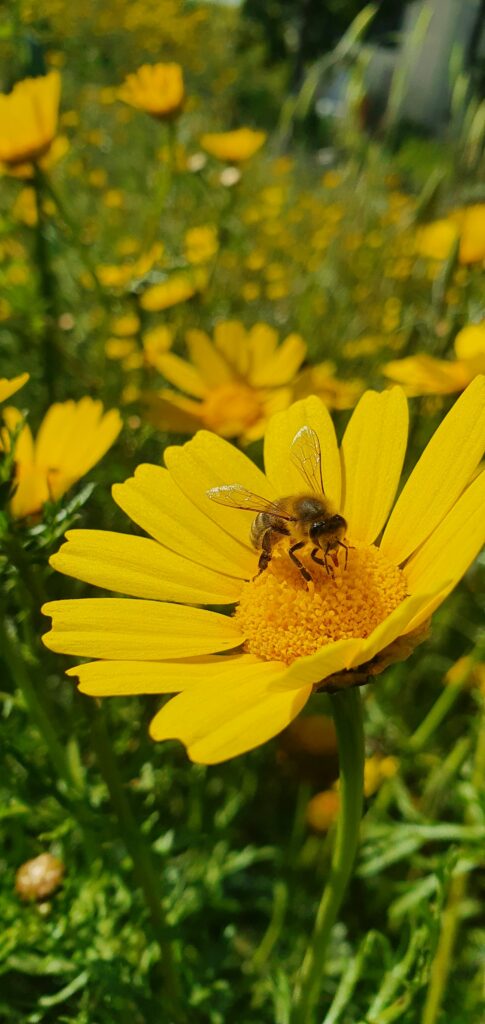
Picture by christos Gavriel on unsplash
No Comments